

Last month, I officially got my third residency. I became a resident of Palau.
- No visa process.
- No immigration office.
- Everything was done online through the Palau Digital Residency Program.
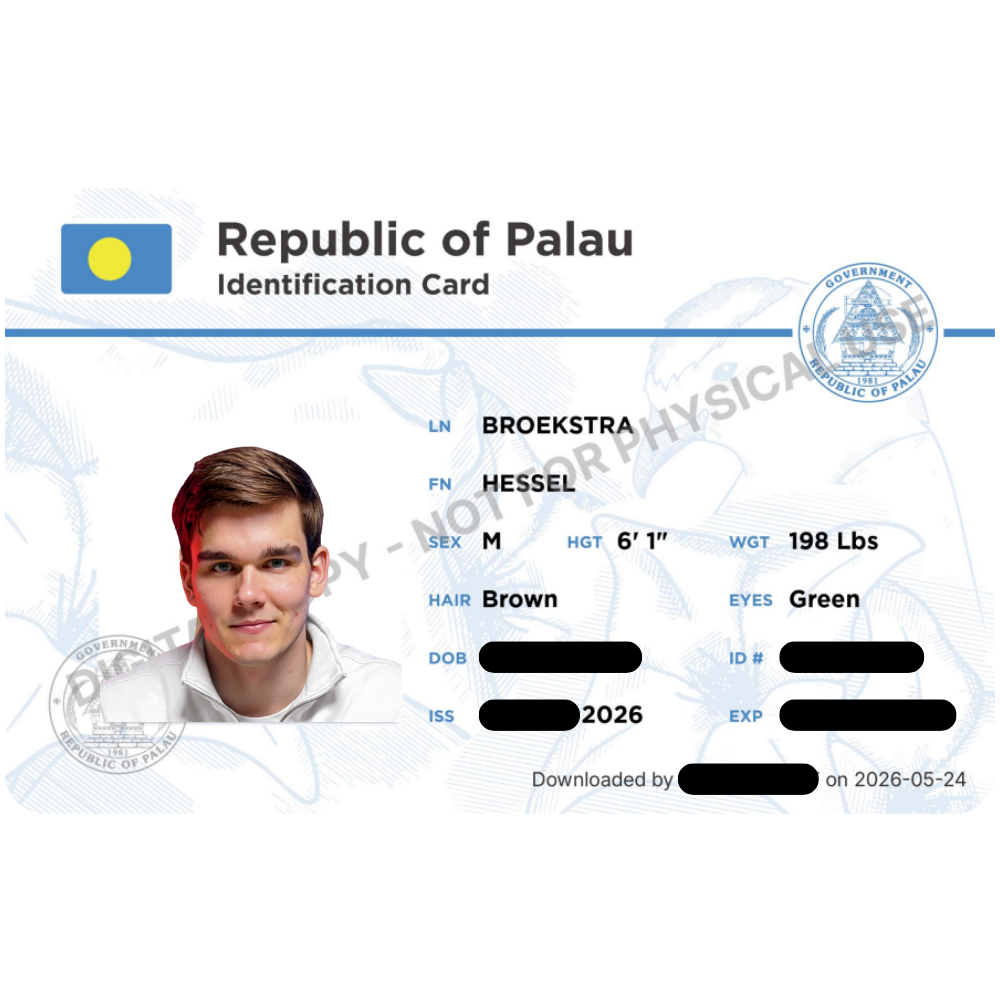
In return, I received a legitimate government-issued ID card from the Republic of Palau that can be used for KYC verification, online platforms, crypto exchanges, and adding an extra layer of privacy when dealing with online services.
If you’re an online entrepreneur, active in crypto, or a digital nomad, you’ve probably already heard about this program.
The Palau Digital Residency has become increasingly popular over the last few years, especially after people like Vitalik Buterin publicly signed up for it as well.
But despite all the attention around the program, there is still a lot of confusion online about what this ID actually is, what it can realistically be used for, and whether it’s genuinely worth the money.

Personal experience

After obtaining the residency myself and working with clients actively using the Palau ID for different purposes, I feel confident giving real information about how the program works in practice.
In this guide, I’ll show you exactly:
– how to get the Palau ID
– what the actual benefits are
– what limitations people rarely talk about
– and whether this program is truly worth your time and money in 2026.
Understanding Palau Digital Residency
What Is the Palau Digital Residency Program?
The Palau Digital Residency Program is a government-issued digital identity program created by the Republic of Palau, a small island nation located in the Pacific Ocean.
When you apply, you receive both a physical ID card that gets shipped to your address, and a digital version connected to Palau’s RNS platform.
The digital identity is also integrated with blockchain technology, which is one of the reasons the program became so popular within the crypto industry.


The program officially launched in 2022 and was designed to give people access to a legitimate government-issued identification document that can be used for various online verification processes.
Palau positions itself as a very crypto-friendly jurisdiction, and the residency program was built with Web3 integration in mind. In fact, it was one of the first government-backed digital identity programs connected to blockchain infrastructure.
Additional Advantages
Beyond using the ID for KYC and online verification, the program also comes with several additional advantages.
First, it adds an extra layer of sovereignty. Instead of relying entirely on a single government-issued document, you now have an additional identity document issued by another sovereign nation.
Second, digital residents are currently allowed to visit and work in Palau for extended stays without needing a separate work visa. At the time of writing, the program allows stays of up to 180 additional days. Because Palau is geographically isolated and politically stable, some people also see it as an interesting long-term backup option or “plan B” jurisdiction.
Another interesting feature is the included Palau mailing address. Digital residents can receive mail in Palau and have it forwarded or scanned digitally. Since Palau operates with a U.S. ZIP-coded postal system, this can also make it easier to order products from certain U.S.-only retailers and have them forwarded internationally.
The government has also announced broader long-term plans for the program. This includes the possibility of allowing digital residents to register online E-Corporations directly through their Palau ID, potentially with favorable tax treatment for foreign-sourced income.
In addition, Palau has explored the development of a U.S. dollar-backed stablecoin to support digital payments and reduce dependence on traditional banking infrastructure.
The bigger vision behind the project is clearly much broader than just an ID card. Palau is positioning itself as one of the first countries experimenting with Web3-based digital identity systems and blockchain-integrated government infrastructure.
That said, many of these features are still developing, so it’s important to view them as future potential rather than fully established benefits today.
What the Palau Residency Is NOT
The Palau Digital Residency program does not lead to citizenship.
It is not a passport, and it does not automatically make you a tax resident of Palau.
So if you’re looking for a second passport, citizenship, or immigration rights, this program is not designed for that.
Who Should Consider This Program?
The Palau Digital Residency is mainly designed for online entrepreneurs, crypto users, digital nomads, and privacy-focused individuals.
Entrepreneurs
If you’re constantly signing up for platforms, opening accounts, and dealing with verification processes, having a secondary government-issued ID can be useful.
Instead of uploading your passport everywhere, you can use the Palau ID for certain verification processes, which reduces your exposure if one of these platforms ever gets hacked or leaks user data.
Crypto and Web3 Users
If you’re active in crypto, the Palau ID can be useful for KYC on exchanges like Binance, Crypto.com, and other crypto platforms.
The program was clearly designed with crypto users in mind. You can even pay for the residency using cryptocurrency, which shows how crypto-focused the project is.
Privacy-Focused Individuals
For privacy-focused people, the biggest advantage is separation.
Instead of using your main passport for every online verification, you can use the Palau ID for less sensitive services while keeping your primary documents more protected.
This reduces the chances of your passport ending up in large data leaks or breaches. In countries like the Netherlands, there have already been massive leaks involving customer identity documents and passport data.
Who This Is NOT For
This program is not for people looking for citizenship, tax residency, or immigration rights.
It’s also not ideal if you expect it to fully work with traditional banks or official government institutions in your home country. You should not expect to use the Palau ID for official government paperwork or major banking relationships.
Real-World Use Case Advantages and Limitations
What Actually Works With the Palau ID
So what actually works with the Palau ID in practice?
The biggest benefit for me personally is using it for KYC instead of constantly uploading my Dutch passport.
The ID works well on many crypto platforms. People actively use it on exchanges like MEXC, Crypto.com, and Bybit. The program was clearly built with the Web3 space in mind, and Palau has been actively working with companies in the crypto industry.
It can also give more flexibility with identity verification on certain platforms.
For example, some countries restrict features on crypto exchanges. In the Netherlands, certain features on exchanges like Bybit, such as staking or advanced trading products, have at times been limited or unavailable.
Because the Palau ID is a separate government-issued identity document, platforms may treat it differently under their compliance systems.
Beyond crypto, the ID can also work for things like Airbnb verification, hotel check-ins, and online platform signups.
Adoption is also slowly expanding. Some neobanks and borderless financial services are beginning to recognize the Palau ID under their “National ID” verification categories.
At the end of the day, the main advantage is simple: instead of uploading your passport everywhere, you can use the Palau ID as a secondary verification document.
This is not about hiding or evading anything. It’s about privacy, protection, and diversification.
Estonia Comparison
I also see a lot of people comparing this program to Estonian e-Residency, and wondering which one is better.
But the two programs are actually very different.
With Estonia’s e-Residency, you receive a digital ID card that gives you access to Estonia’s online government system. It allows you to digitally sign documents, manage an Estonian company, and interact with government services.
However, the card itself does not function as an identification document. You can’t use it worldwide, and it is not accepted as a valid ID.
The Palau ID is different:
It’s worldwide accepted and recognized. It’s a real ID card for e-residents. This means, again, online platforms use it, but you could, for example, also use it in a local store to verify your age or to or other situations where an ID is accepted. These things are not possible with an Estonian residency card.
Estonia is for incorporation; Palau is for identification.
How to Apply for the Palau Residency Card
Getting the Palau Digital Residency is actually very straightforward, and the entire process can be completed online.
To apply, you can use this link:
RNS Palau Residency Application
That will take you directly to the official RNS platform where you can choose your residency package and start the application process.
If you want a full visual walkthrough of the process step-by-step, including the KYC verification, payment process, and how the dashboard works, you can also watch my full YouTube guide here:
Full Palau Residency Video Guide
The application itself is relatively simple. You create an account, choose your residency duration, complete the payment, upload your identification documents, and go through the KYC verification process.
Once approved, the physical ID card gets shipped to your address worldwide.
Costs and Validity Options
Pricing Structure (1-year, 5-year, 10-year)
The Palau Digital Residency is available in several different packages depending on how long you want the ID to remain valid.
The standard 1-year residency costs $288 per year, including shipping and handling.
If you plan to use the ID long-term, there are also multi-year options available. The 5-year version costs roughly $1,200, while the 10-year version is around $2,340.
When you break that down yearly, the 10-year option comes out significantly cheaper per year compared to renewing annually.
So if you already know you’ll be using the Palau ID for years to come, the longer-term packages can offer better value overall.
Just keep in mind that pricing may change over time, since these are the prices available at the time of writing.
Receiving Your Physical ID Card
Once your application gets approved, the physical ID card usually takes another 7 to 10 business days to be printed and shipped.
In total, most people receive their Palau ID within roughly 2 to 4 weeks after applying, depending on shipping times and where they live.
The card ships worldwide, and you’ll receive a tracking number by email once it has been dispatched.
While waiting for the physical card, you already get access to the digital version through your RNS account. This digital version can already be used for certain online verification processes, so you do not necessarily need to wait for the physical card to start using the residency.
Common Misconceptions
One of the biggest misconceptions about the Palau Digital Residency has to do with taxes.
Some people believe that getting the Palau ID automatically means they now pay 0% tax. That is simply not how taxation works.
Even though the program mentions favorable tax treatment for certain activities inside Palau, that does not suddenly make your personal income tax-free.
In most cases, taxes are based on where you actually live and are tax resident, not which ID you use for KYC verification.
For example, if you live in Germany, the United States, or Canada, using a Palau ID on a crypto exchange does not remove your local tax obligations.
You can use the ID for identity verification purposes, but you still need to report your income and assets according to the tax laws of your country of residence.
This is something many people misunderstand online, especially in crypto communities. Using a Palau ID does not magically make your crypto gains tax-free.
Verdict
So, what’s my final verdict on the Palau Digital Residency?
Honestly, getting a legitimate government-issued ID from a sovereign nation for around $288, while being able to complete the entire process online, is actually a pretty good deal.
If you’re active in crypto, constantly dealing with online verifications, or simply want to reduce how often you upload your passport to random websites, the Palau ID can genuinely be useful.
It’s also interesting for people who want to diversify their global footprint and build a more sovereign digital identity.
Of course, it’s important to keep realistic expectations. This is not citizenship, not a passport, and not a magic tax solution. But as a secondary ID for online use cases, it fills a very unique niche.
If you want to apply for the Palau Residency yourself, you can do so here:
Apply for Palau Digital Residency
And if you want to watch the full step-by-step walkthrough of the process, you can watch my full video guide here:
Watch the Full Palau Residency Guide